Two of RiNo's Founding Breweries Just Became Racquet Clubs. The Restaurant Wave Kept Coming Anyway.
October 1, 2026
October 1, 2026
The building at 3200 Larimer Street poured wine for twelve years. The Infinite Monkey Theorem opened there in 2012, one of the businesses that gave RiNo its early identity as a place where fermentation happened in the open, tanks visible through garage doors, tasting rooms doubling as gallery space on First Fridays. It closed for good on December 31, 2024. The space sat quiet for most of 2025.
This fall it reopens as Doubles Club, six indoor pickleball courts inside 15,000 square feet, with a cafe and a bar built around the same open floor plan that used to hold fermentation tanks. Co-creators Will Lake and Alexandra Hansen are running it as their first business venture, and the late-fall 2026 launch will make it the third dedicated racquet-sports club to open within walking distance in under two years. That's not a coincidence of timing. It's a pattern, and it's happening inside the same buildings that built the neighborhood's original reputation.
Doubles Club's membership structure starts at a $49-per-month Social tier, with $99 Member and Pro options that include four court hours a month, open play access, and a 10 percent cafe discount. The company has partnered with Denver-based creative advisory firm Studio Four to handle everything from lighting and audio to custom scenting, and it's still hiring its first full-time general manager. This is a business being built with the same production values RiNo restaurants use for a menu launch, applied instead to a padel and pickleball venue.
The choice of address matters. A former urban winery has the ceiling height, the open floor plan, and the concrete slab that a six-court facility needs without a ground-up build. RiNo has three of those buildings within a few blocks of each other, and two of them just changed industries entirely.
In June, Miami-based Ace Padel announced plans for a 26,000-square-foot luxury racquet club with seven courts at 1812 35th Street, reusing a space that used to belong to Great Divide Brewing Co. Great Divide was one of RiNo's anchor breweries, the kind of name that showed up on every "what to do in RiNo" list for a decade. Its former home is now being converted by an out-of-state operator into a facility roughly the size of a big-box grocery store, built entirely around padel and pickleball.
A few blocks over, Padel Haus opened at 2501 Welton Street in late 2024, offering five indoor padel courts, a juice bar, and $40-per-hour court rentals. Padel Haus wasn't a former brewery, but its opening timeline puts it at the front of the same wave: three clubs, roughly 18 indoor courts combined, all landing in or immediately adjacent to RiNo within a two-year window.
Denver's public infrastructure is growing too, just at a different pace. Denver Parks & Recreation opened three new pickleball courts at Rosamond Park in late August, bringing the city's outdoor total to 52 courts. Set that number against what's landing in RiNo alone: three private clubs adding somewhere near 18 indoor, climate-controlled courts in a corridor that's maybe half a mile end to end. The private investment moving into this specific neighborhood is arriving faster and more concentrated than the public court expansion happening across the entire city.
The demand behind it is real. The Sports & Fitness Industry Association's 2026 report found that 24.3 million Americans played pickleball in 2025, a 479 percent increase since 2020, making it the fastest-growing sport in the country for five straight years running. That growth curve explains why an out-of-state operator like Ace Padel would look at a vacated Denver brewery and see a racquet club instead of another taproom. It doesn't fully explain why RiNo specifically became the landing zone for three of them, except that the buildings were already there, empty, with the bones a converted club needs.
None of this slowed down what RiNo does best. The neighborhood's restaurant pipeline kept running through the same twelve months that saw its beverage-production buildings change hands.
Heretik opened May 6, 2026, at 1441 26th Street on the RiNo and Five Points border, bringing James Beard Award-nominated chef Theo Adley, previously of Marigold in Lyons, with a Basque and Southwestern French menu built around a rotisserie chicken as the signature dish, priced at $36 for a half and $68 for a full bird, served at a six-seat counter that overlooks the kitchen.
Dear Emilia opened January 29, 2026, inside RiNo's The Current building, from the team behind Restaurant Olivia: chef Ty Leon, hospitality director Heather Morrison, and Austin Carson. The menu is built around Italy's Emilia-Romagna region, and the signature dish is tigelle at $19, stuffed with bison mortadella mousse and pistachio butter.
Milpero opened May 13, 2026, as a 16-seat, 18-course Mexican tasting menu at $225 per person, from Johnny and Kasie Curiel, the duo behind Alma Fonda Fina, Mezcaleria Alma, and Alteño. The room is built around heirloom corn sourced from Boulder's Masa Seed Foundation, with a glass-enclosed fermentation lab and a hot counter where house-nixtamalized masa turns into dishes like tamal de mar with Hokkaido uni.
Three restaurants, three different price points, three different kitchens, all opening in the same window the neighborhood's founding beverage businesses were closing or converting. The food scene isn't reacting to the racquet-club wave. It's running on its own separate timeline, in its own separate buildings, at the same time.
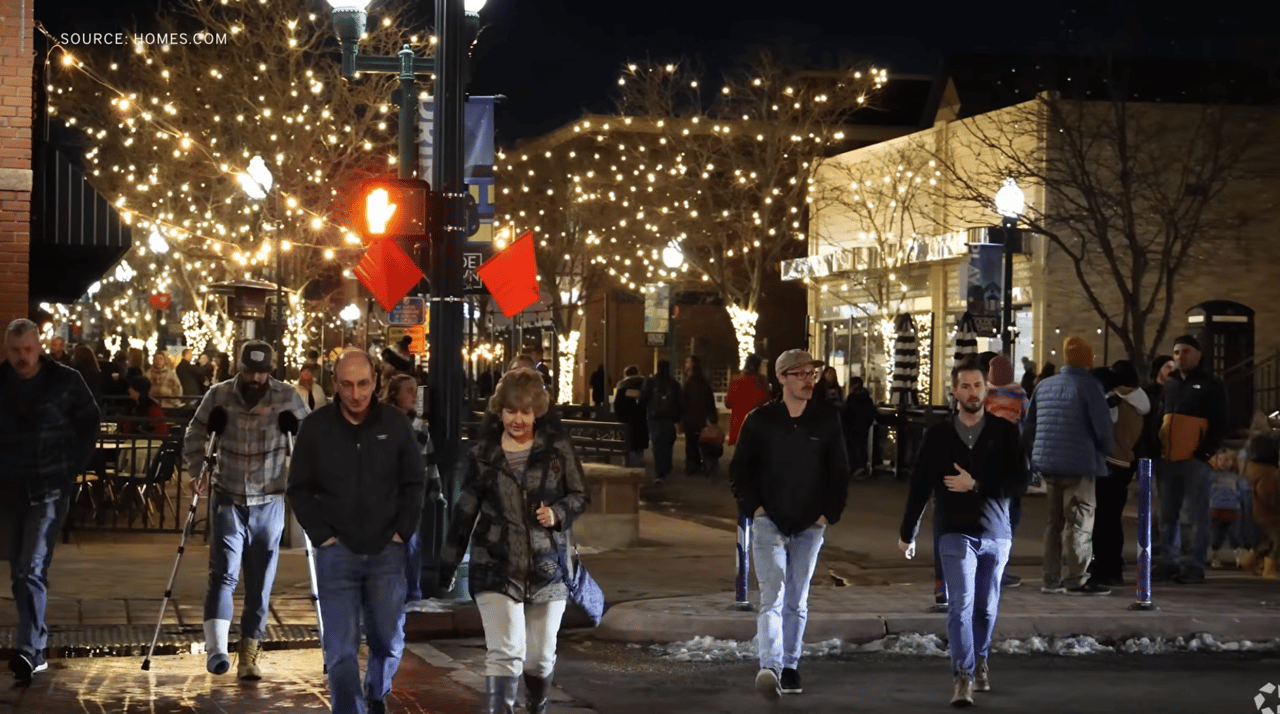
First Friday is the constant. On September 4, 2026, from 6 to 9 p.m., the RiNo Art District ran its regular art walk alongside the RiNo ArtPark Festival at Arkins Park, 1900 35th Street, a free evening built around live music, a curated vendor market, food trucks, and rotating exhibitions inside Truss House Gallery. That same night, La Vie En Rose, a Parisian-inspired champagne bar, opened in the former Noble Riot space at 2636 Walnut Street, running 5 to 11 p.m. Down the block, Visions West Contemporary at 2605 Walnut opened a reception for a show called "Hansel, Gretel and the Wolf."
The 2026 ArtPark festival calendar runs May 1, June 5 in partnership with Denver Fringe, a June 20 solstice party, August 7, September 4, and continues through the fall with an October date tied to Art RiNo 2026. This is the second year the monthly art walk has expanded into a formal festival series, and it's the one part of RiNo's identity that hasn't been touched by the building turnover happening two blocks away. The tanks are gone from 3200 Larimer. The Truss House gallery walls are still hanging new work every month.
RiNo's identity used to run through its beverage-production buildings first and its food and art scene second. That order has flipped inside the same footprint. The winery and one of the anchor breweries are becoming racquet clubs backed partly by out-of-state capital, while the restaurant openings and the First Friday calendar keep expanding on their own separate track, largely untouched by what's happening to the buildings that used to define the neighborhood's daytime economy.
For anyone who's lived here through the brewery years, that's the real shift worth clocking this fall. Not that RiNo added padel courts. That the buildings which built its reputation are the ones being repurposed first, while the parts of the neighborhood people actually show up for on a Friday night kept their address and their crowd.
If you're watching how a corridor like this reshapes itself building by building and want to know what it means for property nearby, Ryan Haarer can walk you through what's changing on the ground in RiNo and Five Points.
Stay up to date on the latest real estate trends.
Five Denver metro neighborhoods positioned for long-term appreciation, and what it takes to protect that return after you own the home
A region-by-region breakdown of the Denver metro area, from the urban core to the far suburbs, with home prices and lifestyle details for every area
The same budget buys a small bungalow in one Denver neighborhood and 5,000-plus square feet in another. Here's what $1 million gets you across six of the metro's best … Read more
From overpricing to skipping staging, the most common missteps costing Denver sellers equity in today's market, and how to avoid them
From Golden's creekside energy to Cherry Creek's luxury district, a neighborhood-by-neighborhood guide to the Denver metro's best walkable centers
He pays great attention to detail, ensuring his clients make sound, smart real estate choices and investments. Contact him today to discuss all your real estate needs!