
5 Reasons Denver Is Positioned to Thrive Over the Next 5 Years
Ryan Haarer July 24, 2026
Ryan Haarer July 24, 2026
Flat home prices in Denver have generated cautious headlines, but those headlines tend to miss the broader picture. A diversified economy, strong internal demographics, major private investment, an unmatched lifestyle, and a more favorable entry point for buyers all point toward a metro with meaningful momentum heading into the next five years.
Denver's economy is not built around a single industry. Aerospace, healthcare, energy, financial services, bioscience, technology, government, and higher education all contribute meaningfully to the regional job base, which means no single sector downturn is capable of destabilizing the broader housing market.
Heading into 2026, the fastest-growing sectors in Colorado were education and health services, government, and trade and transportation, the kind of steady industries that keep a local economy grounded when more volatile sectors pull back.
The aerospace sector is a particular standout. Metro Denver consistently ranks among the top metros in the country for private aerospace employment concentration. Lockheed Martin employs more than 14,000 people in Colorado across deep-space exploration, satellite systems, and missile defense programs. Northrop Grumman, Raytheon, United Launch Alliance, Sierra Space, and BAE Systems Space and Mission Systems all maintain significant operations in the region. Sierra Space is headquartered in Louisville, Colorado, with Dream Chaser mission control based there as well. BAE has operations in Broomfield, Boulder, and Westminster.
United Airlines' Denver hub became the airline's largest hub in the country in 2024, surpassing Chicago O'Hare, with more than 7,000 employees locally. United is currently constructing a new flight training campus on land it purchased near Denver International Airport, with additional room for growth built into the site.
For homeowners and buyers, that kind of job diversity functions as a set of economic shock absorbers. When one industry has a difficult year, sustained demand from other sectors helps hold the floor on housing activity.
Denver's housing demand is often assumed to depend primarily on people relocating from other states. In reality, a significant and self-sustaining source of demand comes from within the metro itself.
The largest slice of Metro Denver's workforce falls in the late-20s-to-mid-40s age range, a cohort actively moving through the housing market as careers develop and households grow. The condo buyer from four years ago is now looking for a yard. The couple who bought a townhome recently had a second child. That internal progression generates consistent transaction volume that runs on its own cycle, independent of relocation trends.
State demographers project Denver's birth rate will continue to outpace its death rate through 2053, suggesting the metro is structurally positioned for continued organic growth regardless of what happens with migration from other states. Colorado also ranks near the top nationally for the share of residents with a college degree, supporting a well-employed workforce that keeps cycling through the housing market even in quieter periods.
In a metro of 3 million people, even a relatively modest fraction of residents moving up, downsizing, or relocating within the area represents a substantial number of transactions. That baseline demand doesn't disappear when headlines call the market slow.
Private capital making long-term commitments in a market is one of the clearest signals available about where serious money expects demand to be in the years ahead.
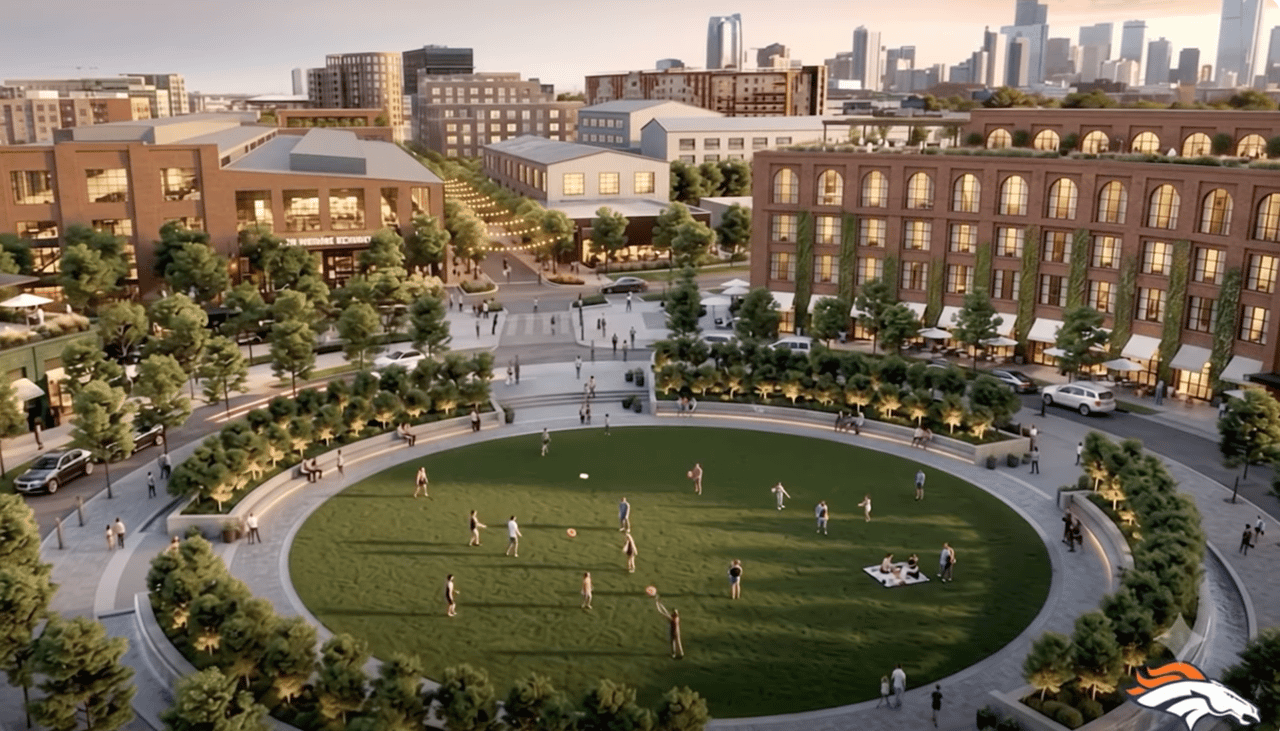
Cherry Creek West, a roughly $1 billion redevelopment of 13 acres directly adjacent to Cherry Creek Shopping Center, broke ground earlier this year. The project includes approximately 825 residences, 600,000 square feet of office space, 100,000 square feet of retail, and four acres of open space. The first major buildings are targeting completion by the end of 2029, with full build-out extending across the following decade.
South of the city, RidgeGate in Lone Tree is a 3,500-acre master-planned development with a long-term vision for approximately 30,000 residents and 50,000 jobs. The project's Lone Tree City Center is developing a 440-acre mixed-use downtown near two light rail stations, providing direct connections to downtown Denver, the Tech Center, and Denver International Airport.
North of downtown along the South Platte River, the National Western Center recently received approval for another $812 million for its latest phase, including a new equestrian center, hotel, and workforce housing, bringing total public investment in the campus to roughly $1.6 billion.
Developers committing capital to projects that stretch into the early 2030s are not making short-term bets. They are betting on Denver's next decade.
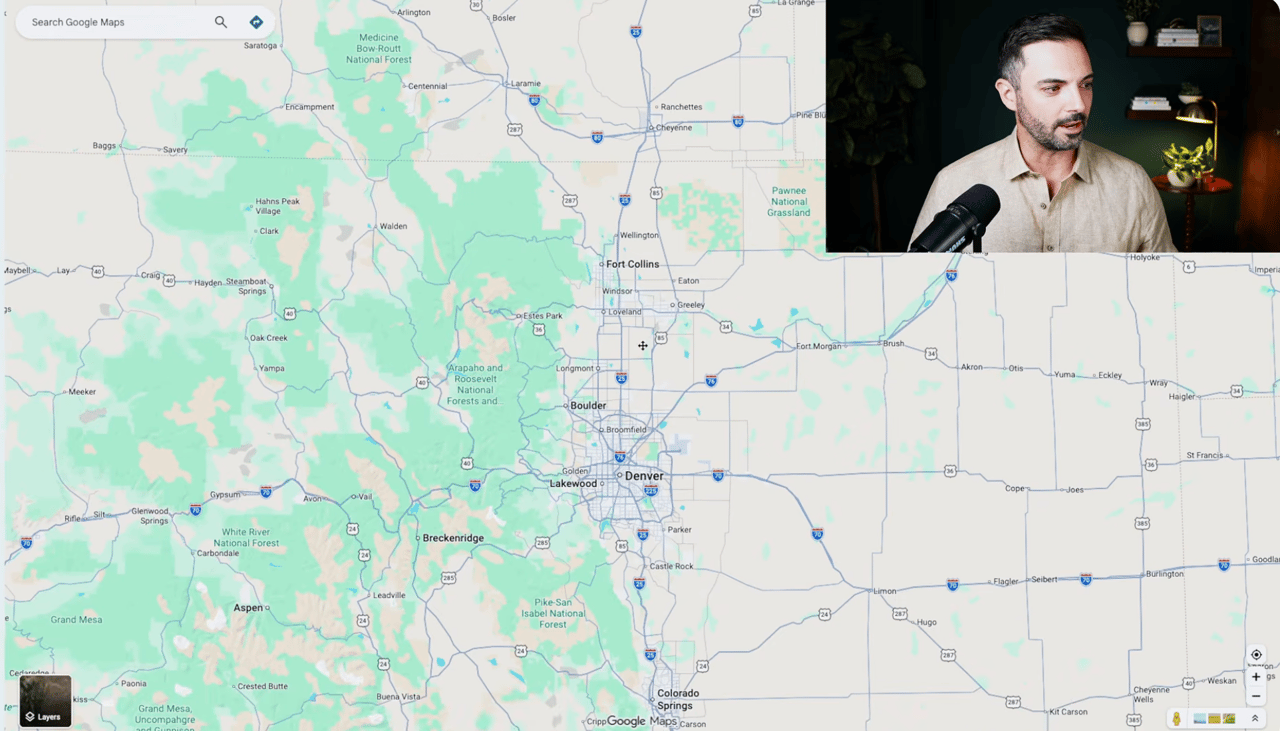
Denver's lifestyle proposition is difficult to replicate in most major metros. Ski resorts and world-class hiking terrain are accessible within an hour or two, making weekday mountain trips a realistic part of everyday life rather than a once-a-year vacation plan. Loveland and Arapahoe Basin sit roughly an hour west, while Breckenridge and Vail run closer to 90 minutes to two hours depending on traffic.
The American College of Sports Medicine ranked Denver fifth in its 2025 American Fitness Index, and the city receives more than 300 days of sunshine annually, more than San Diego or Miami Beach by Visit Denver's figures.
That lifestyle is increasingly being built directly into neighborhoods rather than treated as something that exists only outside the city. Cherry Creek West is incorporating parks, pedestrian paseos, and Cherry Creek trail access into the project itself. The former Park Hill Golf Course northeast of downtown is being converted into Denver's fourth-largest park, backed by $70 million in bond funding. Along the South Platte, The River Mile project is restoring a full mile of riverfront and building 32 acres of parks into the development, with new bridges connecting into the city's existing trail network.
The long-term case for Denver is supported by the factors above, and the near-term market is creating an entry point that hasn't existed in several years.
Inventory is up, overpriced listings are sitting longer, and buyers have room to negotiate on price, inspection terms, and closing costs in ways that were largely unavailable during the peak years of 2021 and 2022. In a more balanced market, thoughtful decision-making replaces rushed offers written under competitive pressure.
Mortgage rates remain in the mid-to-upper 6% range, which is not the environment anyone would choose. But buyers waiting for the ideal headline often find themselves competing again the moment rates move even modestly lower, as other buyers re-enter the market simultaneously. That window of reduced competition and increased leverage can close quickly.
Buying into a softer market, then holding through the next phase of build-out across Cherry Creek West, the National Western Center, RidgeGate, and Centennial's planned I-25 redevelopment, is a strategy that requires patience but not guesswork. The projects are already underway. The timeline is visible.
Denver's five-year case is not a prediction built on optimism alone. It is visible in the projects currently breaking ground, the employers expanding their local footprints, and the demographic momentum that continues to renew demand from within the metro itself. For buyers in a position to act thoughtfully, the current market offers a level of strategic flexibility that has been rare in Denver for several years.
Ryan Haarer is one of the top 1.5% of realtors by volume in the country, according to RealTrends, and works in the Denver metro area. Reach out for a personalized consultation by calling or texting Ryan at 303-507-5910 or emailing him at [email protected].
Stay up to date on the latest real estate trends.
From major residential projects and infrastructure upgrades to new dining and retail, a comprehensive look at what’s changing across the Denver metro this fall
Five Denver metro neighborhoods positioned for long-term appreciation, and what it takes to protect that return after you own the home
A region-by-region breakdown of the Denver metro area, from the urban core to the far suburbs, with home prices and lifestyle details for every area
He pays great attention to detail, ensuring his clients make sound, smart real estate choices and investments. Contact him today to discuss all your real estate needs!