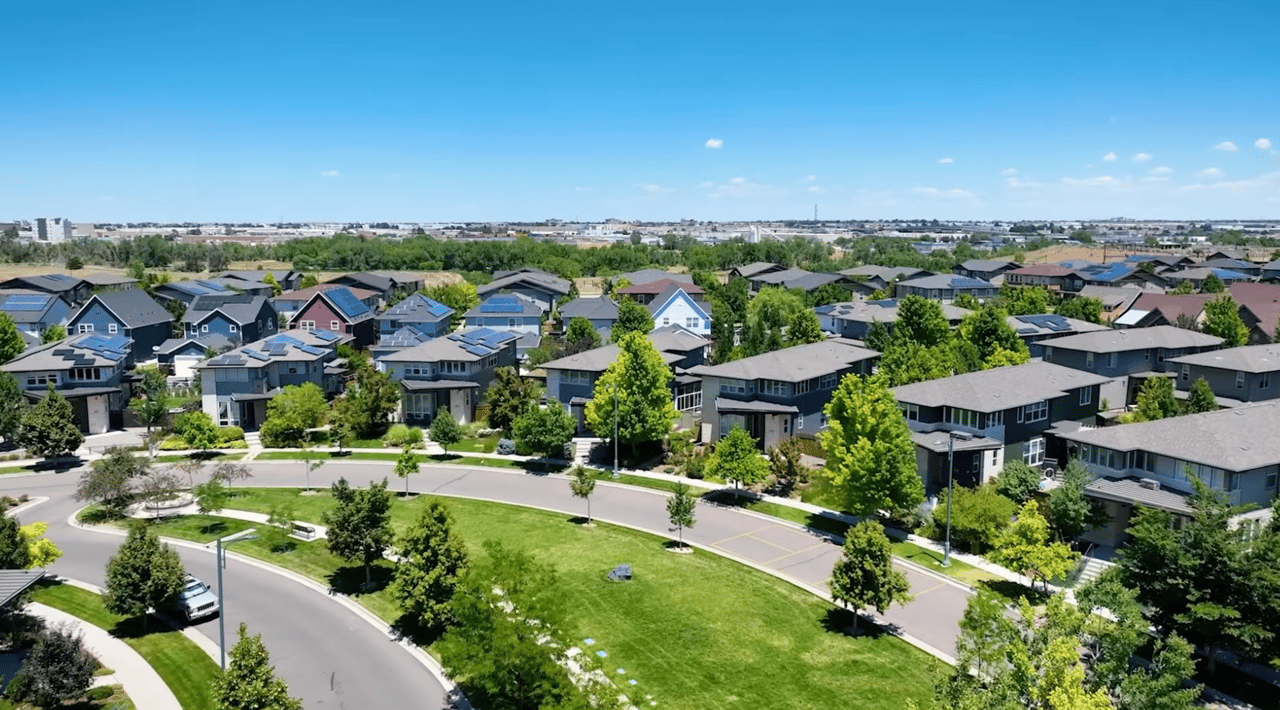
What Realtors Don't Tell You About Buying a Home in Denver
August 9, 2026
August 9, 2026
Colorado has some of the lowest property tax rates in the country. That part is true. But in certain new construction communities around Denver, metro district taxes can double or even triple that bill. That's just one of several costs many buyers don't encounter until after they've signed.
Buyers relocating from markets where median home prices sit in the mid-$400,000s often find Denver's price landscape jarring. At that price point in the Denver metro, the search typically returns condos, townhomes, older homes needing significant updates, or locations outside the neighborhoods buyers had in mind.
The metro-wide median home price sits at approximately $600,000, which represents a realistic entry point for a single-family home. In the $500,000-to-$600,000 range, buyers can find three-bedroom, two-bath homes in solid neighborhoods, though likely with some updates needed and outside the most competitive zip codes.
Around $700,000, the search starts to shift. Buyers at this price point begin to have more say over which trade-offs they're willing to make. The $700,000-to-$800,000 range can yield updated homes closer to 3,000 square feet in more desirable areas, and some strong new construction options exist at this level as well. Below $1 million in Metro Denver is not luxury territory, but it does provide enough room to balance competing priorities without feeling forced into a compromise on every front.
The current Denver market is frequently described as stable, and in the sense that prices aren't falling sharply or surging rapidly, that characterization holds. But it leaves out important nuance.
Sellers are working harder than they were a few years ago. Buyers, in most segments of the market, have real choices in front of them. The result is a split market: homes that are well-priced, well-presented, and in the right location still move quickly, while homes that miss on any of those factors tend to sit and accumulate days on market.
The 30-year fixed rate is currently in the mid-to-upper 6% range, and a $700,000 home carries a monthly payment that many sellers have never personally experienced. Buyers are being selective not because Denver has become affordable, but because the monthly payment is significant, and every additional ownership cost gets evaluated against it.
Two factors specific to the Denver market are worth understanding before touring homes.
Soil. A significant portion of the Front Range sits on bentonite clay, a soil type that swells and contracts with changes in moisture. The Colorado Geological Survey identifies it as the most significant geological hazard in the state. During a home inspection, an inspector may spot signs of foundation shifting or cracking associated with soil movement. When that happens, hiring a licensed structural engineer to assess the situation and determine whether remediation is warranted is a prudent next step.
In some cases the findings are cosmetic, in others they represent real repair costs. Most issues can be addressed, but buyers should also consider whether they're comfortable owning, and eventually reselling, a home with foundation history on record. Newer construction has generally been engineered with this issue in mind, but settling can still occur across the metro.
Radon. Approximately half of Colorado homes test above the EPA action level for radon, and Denver is classified as a high-risk area. A radon test alongside the standard home inspection is recommended for every buyer. If levels come back elevated, requesting that the seller install a radon mitigation system before closing is a standard and reasonable ask. Mitigation systems typically run between $1,300 and $2,500.
Buyers purchasing new construction should note that builders are not required to install a full active mitigation system prior to move-in. A passive pipe may be in place, but without a fan, it is not fully functional. Testing after move-in and budgeting for a fan installation from the start is advisable.
Colorado's low property tax rate is a genuine advantage for many homeowners, but new construction communities frequently operate under a different tax structure entirely.
Most new developments in Colorado are built within special metro taxing districts, which are separate taxing entities established to help finance the infrastructure required to build a new community, including roads, sewer lines, and utilities. Residents within those districts help pay down that infrastructure debt over time through an additional mill levy on top of standard property taxes.
In practice, this means two similarly priced homes can carry significantly different monthly costs depending on whether one sits inside a metro district. New construction communities in Aurora, Parker, Littleton, Castle Rock, and elsewhere can carry property taxes two to three times higher than comparable homes outside a metro district. Buyers accustomed to Colorado's reputation for low property taxes are frequently caught off guard when they see the actual tax bill on a new build.
Before falling in love with a listing price, buyers should ask about the mill levy and how the metro district is structured. Those two questions provide a more accurate picture of the real monthly cost than the list price alone.
The National Weather Service designates the Nebraska, Colorado, and Wyoming corridor as Hail Alley, the most hail-active stretch in the country. Denver area storms can produce hail capable of damaging roofs, cracking windows, and tearing up siding in a single afternoon, and homeowners insurance rates reflect that reality.
Homeowners insurance costs in Colorado roughly doubled between 2020 and 2025. State data identifies hail, not wildfire, as the primary driver, and hail-related losses can account for as much as half of an annual premium in some cases. Colorado did pass legislation, SB26-155, to help fund grants for impact-resistant roof upgrades, though the program is still in early stages.
The practical advice: get an insurance quote before making an offer, not after. Ask about the age and material of the roof, and review the wind and hail deductible carefully before committing.
Denver's elevation of 5,280 feet is the other environmental factor buyers sometimes underestimate. The body typically needs a few days to adjust after arriving from lower elevations. Physical exertion feels harder, dehydration sets in faster, and alcohol hits more quickly than it would at sea level. The Cleveland Clinic recommends moderating alcohol intake and increasing fluid consumption during the adjustment period. For buyers planning trips into the mountains, most ski resorts sit between 8,000 and nearly 11,000 feet at the base, where altitude sickness is a more significant consideration, particularly for newcomers to Colorado.
The purchase price of a Denver home and the cost to own it are two different numbers, and the gap between them is shaped by inspection findings, metro district taxes, insurance rates, and elevation. Buyers who understand those variables before making an offer are in a significantly better position to evaluate what a listing is actually worth and what it will cost to own over time.
Ryan Haarer is one of the top 1.5% of realtors by volume in the country, according to RealTrends, and works in the Denver metro area. Reach out for a personalized consultation by calling or texting Ryan at 303-507-5910 or emailing him at [email protected].
Stay up to date on the latest real estate trends.
From metro district taxes to soil issues and hail insurance, five hidden costs buyers need to understand before making an offer in Denver

Cherry Creek schools, mature neighborhoods, and more square footage for the money — what buyers keep missing about this south Denver suburb

Transactions are still happening, and great homes are still hitting the market, just less often

From aerospace employment to billion-dollar developments, the data behind Denver's long-term real estate outlook

A seasonal breakdown of Denver's real estate calendar, and how to use timing as an advantage whether buying, selling, or doing both at once
He pays great attention to detail, ensuring his clients make sound, smart real estate choices and investments. Contact him today to discuss all your real estate needs!