Living in Denver: A Complete Map Tour of Every Major Neighborhood and Suburb
Ryan Haarer September 15, 2026
Ryan Haarer September 15, 2026
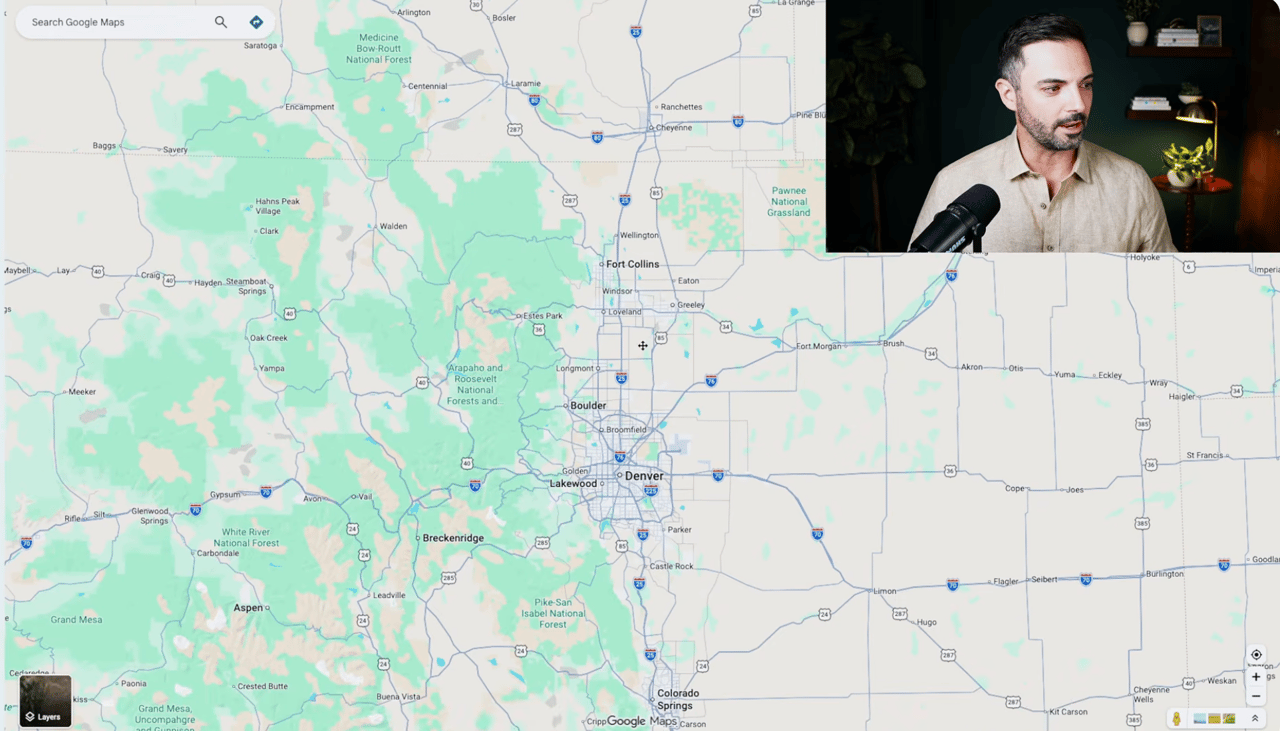
Denver can be difficult to mentally map for newcomers. Most people arrive knowing a handful of neighborhood names without understanding how the metro fits together. The good news is that two highways explain most of it, and once those click into place, every suburb and neighborhood suddenly has a logical home on the map.
Interstate 25 runs north to south and serves as the metro's spine, connecting Wyoming and Fort Collins to the north, threading through downtown Denver, and continuing south through the suburbs, Castle Rock, Colorado Springs, and all the way to New Mexico.
Interstate 70 runs east to west, carrying drivers from the western foothills through the city core and out to Aurora on the eastern edge of the metro.
The two highways cross near the center of the metro, and that intersection anchors everything else on the map. Once a buyer can visualize that crossing point, every neighborhood they've heard about has a logical home relative to everything else.
Denver's urban core is the reference point for almost every relocation decision in the metro. The city earns its nickname — the capitol steps sit at exactly 5,280 feet above sea level.
The walkable core includes Union Station and the historic LoDo warehouse district, the restaurant and nightlife scene in LoHi, the murals and food halls of RiNo, and the upscale shopping and dining of Cherry Creek. Colorado averages roughly 245 to 250 fully sunny days per year, keeping residents outdoors across most of the calendar.
Denver's city limits extend east in a long, narrow arm to Denver International Airport, about 25 miles northeast of downtown on the plains. The commuter rail line connects downtown to the airport terminal in roughly 35 to 40 minutes.
As a general rule, the closer a home is to downtown Denver, the higher its price. That gradient shapes the entire conversation about where to live in the metro.
The I-25 corridor heading south from Denver is one of the metro's most in-demand residential areas, driven largely by the Denver Tech Center, one of the region's largest suburban employment hubs, situated along the corridor.
Centennial is the closest established suburb to the city along this corridor, built out primarily in the 1970s and 1980s with mature neighborhoods and a strong sense of community. Pricing generally falls in the low-to-mid $600,000s.
Highlands Ranch is one of the metro's best-known master-planned communities, built around a resident-funded network of recreation centers, pools, and gyms. Homes typically land in the high $600,000s to low $700,000s.
Lone Tree is newer and more upscale, with significant investment in shops, restaurants, and polished community infrastructure. Pricing runs from the mid-$800,000s into seven figures.
Castle Pines splits into two distinct areas. The canyon-side development features newer construction generally starting in the high $800,000s to $1 million, while Castle Pines Village is a premier Front Range luxury enclave with large private lots, mature trees, and a setting that has hosted the BMW Championship on the PGA Tour. Homes in Castle Pines Village routinely sell above $1.5 million.
Castle Rock anchors the far south with its own identity: a historic downtown, a major outlet center, and steady new construction. The trade-off is a roughly 40-to-50-minute commute to downtown Denver on I-25. Pricing generally falls in the low-to-mid $600,000s.
The western side of the metro offers the most distinctly Colorado feel of any region, with mountain views, strong trail access, and an outdoorsy pace of life throughout the week.
Littleton has two personalities. The southern portion runs toward Chatfield State Park and the emerging Sterling Ranch community. North Littleton is established and built-out, with popular pockets including Ken Caryl, Columbine, and Bow Mar, all close to Bear Creek Lake Park and Red Rocks Park and Amphitheatre. The Jefferson County trail system runs throughout the area. Littleton overall prices in the low-to-mid $600,000s.
Lakewood is the value play of the western suburbs, offering older homes with solid bones and genuine foothills access for first-time and move-up buyers staying under seven figures. Prices generally run from the mid-$500,000s to the mid-$600,000s.
Applewood and Wheat Ridge sit close to the city, roughly 20 minutes to downtown, featuring a mix of older character homes and newer luxury infill construction on scraped lots.
Golden and Evergreen represent true mountain-town living, both about 40 to 45 minutes from downtown. Golden has a historic walkable downtown with Clear Creek running through it. Evergreen feels like leaving the city for the mountains entirely. Both areas generally price in the high $800,000s and above.
The consistent trade-off on the west side is a longer commute in exchange for mountain proximity and a trailhead close to home.
The northern portion of the metro offers some of the strongest value for buyers looking for a single-family home without pushing into seven figures. Newer master-planned neighborhoods and more room in the budget make this region a strong starting point for first-time buyers.
Arvada spans both the western and northern portions of the map and breaks into three distinct areas. Olde Town Arvada is quaint and walkable with smaller older homes that rarely cross into seven figures. The established center of Arvada is thoroughly suburban with standard retail and services. Northern Arvada is where new master-planned neighborhoods are currently going up. The city overall trends in the low-to-mid $600,000s.
Thornton allows buyers to land a single-family home without reaching seven figures, with standout communities including the golf course and 55-plus community of Todd Creek. Pricing generally runs in the high $400,000s to low $500,000s.
Westminster sits a touch higher than Thornton with more established amenities, generally landing in the mid-$500,000s.
The outer edge of the northern metro runs through Broomfield, Erie, Louisville, Lafayette, and Superior, all featuring newer master-planned construction with strong mountain views. These communities sit geographically between Boulder and Denver, which is their primary draw. Pricing starts in the low-to-mid $600,000s around Broomfield and climbs toward the high $600,000s to $700,000s approaching Erie and Lafayette.
Aurora is the dominant story on the east side of the metro, and the most important thing to understand about it is that it is not a single neighborhood. It is the third-largest city in Colorado, and its character changes significantly depending on where within its boundaries a buyer is looking.
The southeastern portion of Aurora, toward E-470, features large master-planned communities with golf courses, quiet streets, and access to the Cherry Creek School District, one of the top-rated in the state. This area carries a notably different feel from the parts of Aurora closest to Denver, and pricing in these southeastern pockets runs well above Aurora's citywide average. The main trade-off throughout Aurora is distance from the city core, with downtown Denver commutes ranging from 45 minutes to an hour in normal traffic. Broadly, Aurora prices around the mid-$400,000s citywide.
Parker bridges Aurora and the southern suburbs, offering more house for the money alongside a walkable Main Street with a genuine town center. Pricing generally lands in the mid-to-high $600,000s.
The Pinery, just south of Parker, runs more upscale with larger lots, more tree coverage, and a quieter, more secluded feel. Homes here are generally priced well into the $900,000s.
The eastern edge of the metro transitions quickly from dense suburban development to open plains, a reminder of how much room the region still has for future growth.
Across most of these suburbs, prices have held relatively flat over the past year, with some areas experiencing modest softening. Inventory has increased compared to the highly competitive pandemic-era market, meaning homes are sitting somewhat longer and buyers have more options and more negotiating leverage than they did in recent years.
Mortgage rates remain in the low-to-mid 6% range, which continues to be the most significant factor shaping affordability across the entire metro regardless of location.
Buyers who arrive in Denver with a clear mental map of how the metro is laid out are significantly better positioned to focus their search on the areas that genuinely fit their commute, lifestyle, and budget. The two-highway framework makes that orientation easier than most newcomers expect.
Ryan Haarer is one of the top 1.5% of realtors by volume in the country, according to RealTrends, and works in the Denver metro area. Reach out for a personalized consultation by calling or texting Ryan at 303-507-5910 or emailing him at [email protected].
Stay up to date on the latest real estate trends.
Five Denver metro neighborhoods positioned for long-term appreciation, and what it takes to protect that return after you own the home
A region-by-region breakdown of the Denver metro area, from the urban core to the far suburbs, with home prices and lifestyle details for every area
The same budget buys a small bungalow in one Denver neighborhood and 5,000-plus square feet in another. Here's what $1 million gets you across six of the metro's best … Read more
From overpricing to skipping staging, the most common missteps costing Denver sellers equity in today's market, and how to avoid them
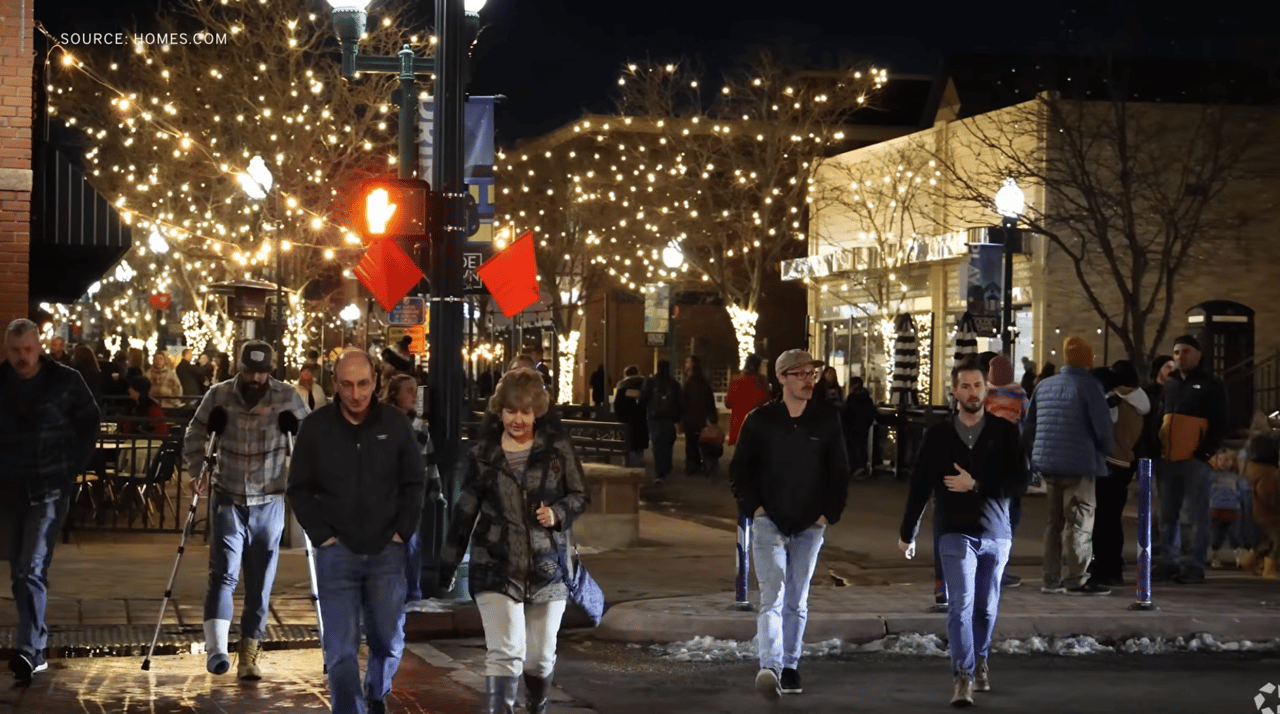
From Golden's creekside energy to Cherry Creek's luxury district, a neighborhood-by-neighborhood guide to the Denver metro's best walkable centers
He pays great attention to detail, ensuring his clients make sound, smart real estate choices and investments. Contact him today to discuss all your real estate needs!