
7 Denver Suburbs Nobody Talks About (But Should)
Ryan Haarer May 22, 2026
Ryan Haarer May 22, 2026
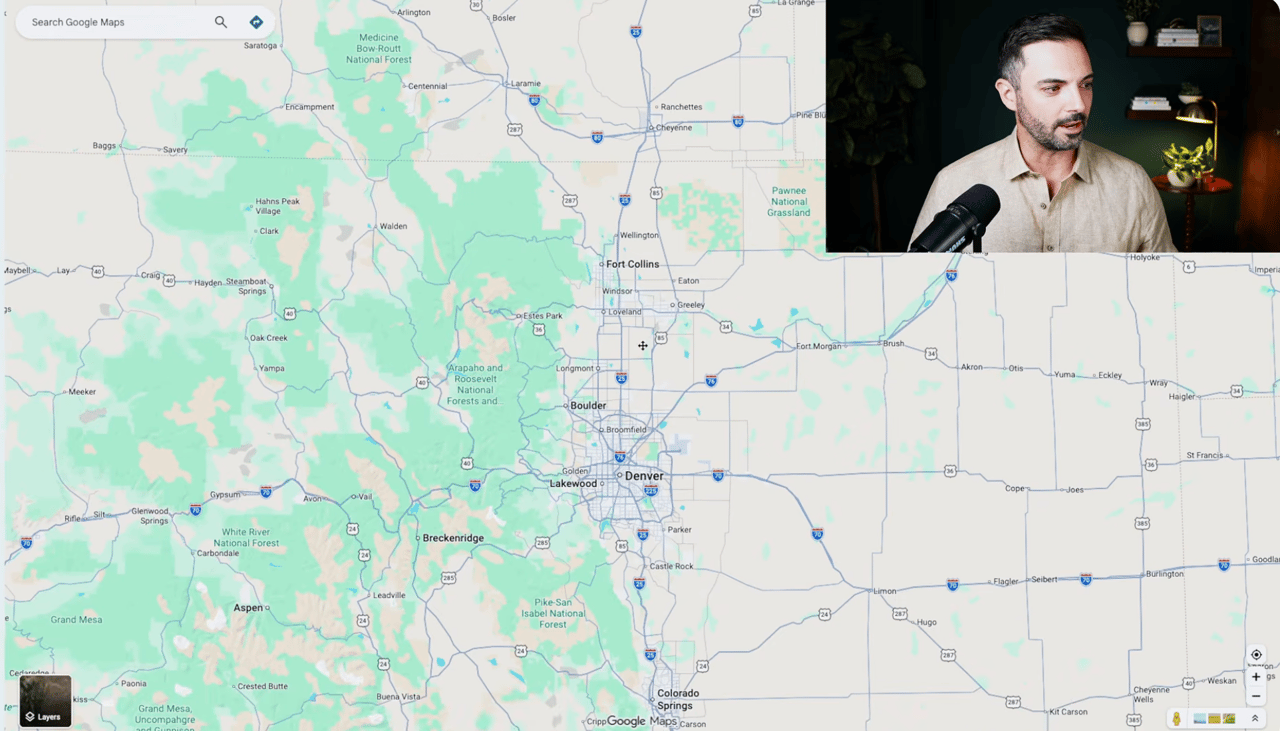
Every Denver suburb guide gives you the same handful of names. This one doesn't. These are seven neighborhoods locals tend to overlook — and a few of them sit right next door to some of the most expensive zip codes in the metro. If you're trying to figure out where the real value is hiding, this is your map.
I'm Ryan Haarer, and I've been in the Denver real estate business for the last six years. Here's where I'd be looking.
Edgewater is a small, tight-knit city just west of Denver, sitting one street back from Sloan's Lake. You get the same lake-life lifestyle for the mid $700s, compared to the mid $800s and up right on the water. You're walking to the same park, soaking up the same Colorado energy, just without paying the full premium.
The streets are quiet and tree-lined, with a mix of updated single-family homes, duplexes, and properties owners have clearly invested in over the years. It draws young couples, first-time buyers, and people who actually know their neighbors. The local scene holds its own, too — Edgewater Public Market is one of the more fun food halls in the metro, and the Edgewater Beer Garden fills up every weekend the weather cooperates.
The opportunity here is simple: you're right next to Denver, getting a real discount for almost the same lifestyle.
When people hear Englewood, they either write it off because it's small, or confuse it with neighboring Cherry Hills Village — one of the most expensive areas in the entire state. Both miss what's actually happening.
Englewood sits in a strategic spot just south of Denver, with direct access to both downtown and the Tech Center. Its older housing stock — 1940s to 1970s homes — is exactly what makes it interesting now, because that foundation creates opportunity. The stretch to watch is South Broadway, where independent restaurants, coffee shops, and local retail are building real momentum. It's not overly polished, and that's part of the charm.
In the couple of miles east and west of South Broadway, you'll find buttoned-up, remodeled older homes with a real yard, a garage, and quick access to everything — the kind of combination that's getting hard to find in Denver proper under a million dollars. In Englewood, you can land something like that in the $500k–$600k range. There are also newer luxury townhomes here at a big discount to Denver proper.
Corridors like South Broadway don't change overnight, but once they start moving, they tend to keep moving — and the buyers who get in earlier usually capture more of the upside.
You know that feeling when you drive through a nice neighborhood and just wish it had a little more space? Wheat Ridge is the answer. It sits just northwest of Denver and Edgewater, so you stay close to the city with easy access to the mountains and multiple highways.
Where Edgewater feels tight, Wheat Ridge opens up. The areas closer to Denver keep that walkable feel, but head north and west and the lots get bigger, the streets get quieter, and the homes get larger. Prices can start in the high $500s, though you're already seeing buyers come in to fully remodel or scrape older homes and build on land you just can't get closer in. The mix runs from mid-century moderns and classic brick ranches to new construction and spec builds — anywhere from $700k up to $2 million, with more small townhomes in the $500s offering real value.
Crown Hill Park anchors the outdoor side with big views and long trails, and The Ridge at 38 has become a genuine local hub of restaurants and breweries. There's also a major redevelopment planned for the old Lutheran Hospital site — new housing, retail, and green space. Projects like that don't happen without real confidence in where an area is heading. The market here has softened a bit, which is good news if you've been priced out just south and east.
Most buyers see I-25, notice Castle Pines sits pretty far south, and keep scrolling. That's a mistake. The name makes people think of the ultra-private golf community, Castle Pines Village — beautiful, but out of reach for most buyers. What gets missed is The Canyons, a master-planned community just east of the highway, and one of the more interesting suburban setups in the metro right now.
The Canyons is built around how people actually live: a resort-style pool, a real gym, and trails running throughout. At the center is The Exchange Coffee House — yes, a master-planned community coffee shop — hosting morning meetups and events that give the place a sense of connection that usually takes years to build.
Pricing covers a wide range. Newer three-bed duplexes start in the mid $600s, single-family homes start in the mid $700s for around 2,500 square feet, and luxury builds climb past $2 million for 6,000 square feet. Yes, it's further south and you'll cross the highway to reach the main corridors — but the price-to-experience ratio is tough to match down there.
A lot of people move to Colorado for a specific feeling — mountains in the background, trails right outside, a sense of being somewhere different. Some parts of Denver don't deliver that. Green Mountain does.
This west Lakewood neighborhood sits right up against the foothills, with rolling terrain, wildlife, and trails that start from the neighborhood and head straight into the hills. It's not full mountain living — you're still very much in the suburbs — but it nails the foothills feel at a great price. The median sits around $600k, which can get you roughly 2,000 square feet with solid updates. Prices have softened a touch; I recently helped a buyer find a great property where the seller even covered closing costs.
The neighborhood is established and fully built out — lots of ranch-style homes and updated builds on hilly streets designed to take advantage of the views, whether of the mountains or of downtown sitting below. What you see is what you get, with no guessing about what shows up later.
Northwest Denver is one of the most popular places to live, but neighborhoods like Berkeley, West Highlands, and LoHi have soaked up most of the attention over the last decade. Sunnyside has been sitting right there — more accessible, still evolving, waiting for the rest of the market to catch up. That wait is ending. Drive through and you'll see new restaurants opening and coffee shops filling up daily; it has that specific feel of a neighborhood right before it fully arrives.
Location is a big part of the appeal. You've got direct access to downtown — close enough to walk, bike, or scooter into the city center, which you can't say about most of the metro — plus quick access to I-70 for the mountains. Pricing sits in the mid $700s, and there's already heavy residential investment, with scrapes turning into large luxury duplexes north of $1 million. That tells you the market has a clear idea of where this is going.
If you want to stay in Denver proper near that downtown energy and still catch a neighborhood while it's taking shape, this is one of the last spots where that exists at a relative discount.
Erie sits north of the metro, further out than anything else on this list. If you need to be five minutes from LoDo, it's probably not for you. But for families, buyers who want something brand new, or people who came to Colorado for space and real community, Erie might be exactly right.
Pull off the highway and the first thing you notice is the mountain backdrop — big, clear views of the Rockies. The town has the kind of small, local feel a lot of suburbs lost years ago, with spots like Fox Dog Coffee and The Birdhouse, plus a genuinely walkable downtown. The trail system keeps growing, and a new pedestrian bridge under construction will connect the newer neighborhoods back to the historic core. Cycling is big here, from road bikes to gravel.
The median sits in the mid $700s, with mostly newer, sizable homes. New construction is the headline draw — communities like Westerly offer newer homes, solid amenities, parks, and family-friendly layouts, with most new builds starting in the low-to-mid $500s. The market has started to recognize what Erie offers, and prices have moved over the past year, but it hasn't fully peaked. A lot of the bigger commercial development hasn't arrived yet, and the value on newer construction is still strong compared to the rest of the metro. That window doesn't stay open forever.
Every area here is either already starting to turn or sitting right on the edge of it — and the difference between getting in now versus waiting a year can be real money.
If you're serious about a move to Denver and want help figuring out which of these actually fits your situation, reach out. Shoot me an email at [email protected] and we'll map it out together.
Stay up to date on the latest real estate trends.
From major residential projects and infrastructure upgrades to new dining and retail, a comprehensive look at what’s changing across the Denver metro this fall
Five Denver metro neighborhoods positioned for long-term appreciation, and what it takes to protect that return after you own the home
A region-by-region breakdown of the Denver metro area, from the urban core to the far suburbs, with home prices and lifestyle details for every area
He pays great attention to detail, ensuring his clients make sound, smart real estate choices and investments. Contact him today to discuss all your real estate needs!