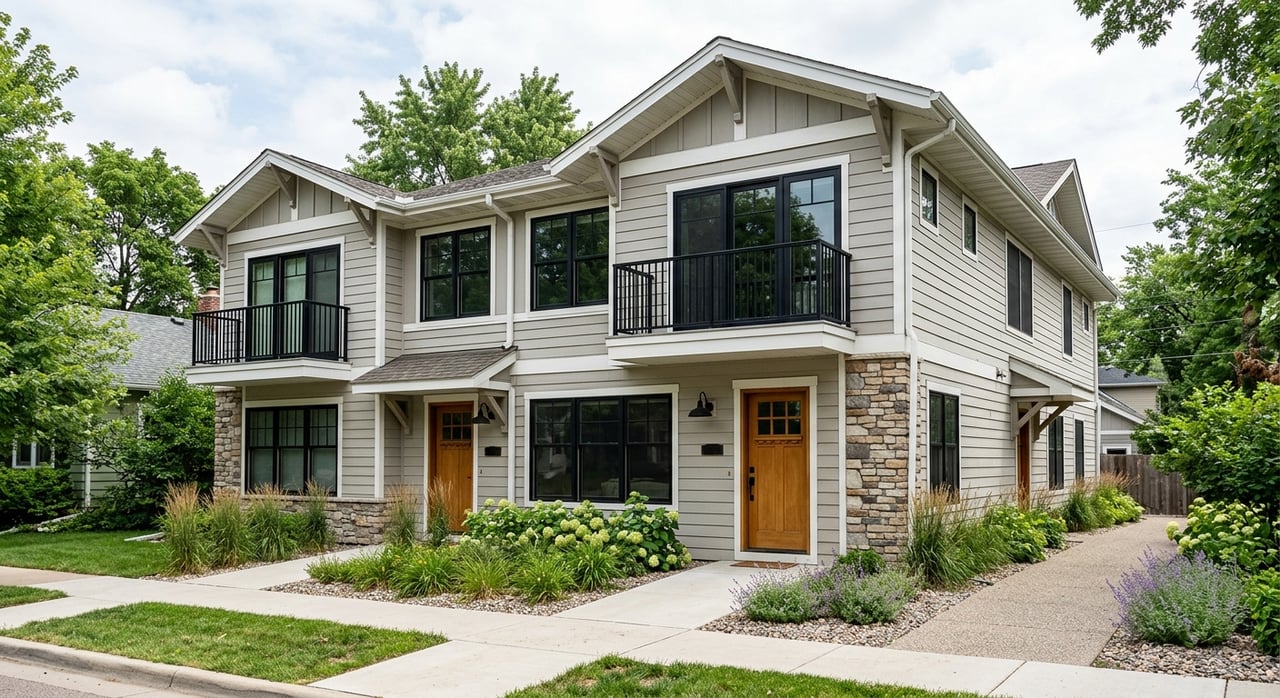
Starter Guide to Small Multifamily Investing in Denver
April 9, 2026
April 9, 2026
If you have been thinking about buying a duplex, triplex, or fourplex in Denver, you are not alone. Small multifamily investing can be one of the most practical ways to start building rental income, especially if you plan to live in one unit and rent the others. The key is knowing how Denver’s pricing, rents, zoning, and financing options fit together before you make an offer. Let’s dive in.
Small multifamily properties can offer a flexible path into real estate investing. You may be able to offset your housing payment with rental income, spread expenses across multiple units, and build long-term equity with one purchase.
In Denver, the current inventory shows a wide range of entry points and property types. Redfin currently shows Denver multifamily listings with examples ranging from an $825,000 duplex in Hale to a $1.48 million quadplex in University Hills, with a median listing price of $915,000. That spread tells you something important: unit count alone does not determine value. Condition, renovation level, and location matter just as much.
For first-time buyers, this creates both opportunity and risk. You may find a property with strong upside, but you also need to underwrite conservatively so you do not overestimate future income or underestimate expenses.
Before you buy, it helps to look at the current rental climate. According to AAMD’s July 2025 vacancy and rent report, metro Denver average rent was down 3.7% year over year to $1,832, and vacancy reached 6.4%.
That matters even more for smaller properties. AAMD reported that properties with fewer than 100 units had a 6.8% vacancy rate, which was the largest and only vacancy increase that quarter. For you as a new investor, that is a reminder to plan for some leasing friction instead of assuming every unit will stay occupied at top rent.
Supply is also part of the story. AAMD’s 2025 EconXchange recap noted that nearly 20,000 new apartment homes were completed in 2024, with about half built in the city of Denver. More supply can create more competition for tenants, which may put pressure on rent growth in the near term.
One of the easiest mistakes in small multifamily investing is using overly optimistic rents. A better approach is to compare conservative benchmarks with current asking-rent data and build your numbers from there.
For a conservative baseline, HUD’s FY2025 Denver-Aurora-Centennial rent limits show:
These are not the same as market rent, but they can serve as a helpful floor when you are stress-testing a deal. If the property still works using conservative income assumptions, you are in a better position.
Current market data can be higher. RentCafe’s Denver rent report puts average rent at $1,885, with 1-bedrooms averaging $1,704 and 2-bedrooms averaging $2,188. Redfin’s Denver rental market page also shows how much rents can vary by area, from lower medians in places like Capitol Hill and Lowry to much higher medians in Cherry Creek, Berkeley, and Washington Park.
The takeaway is simple: do not underwrite Denver as one market. A duplex in one neighborhood may have a very different rent profile and leasing pace than a similar building in another part of the city.
Gross rent can make a property look better than it really is. What matters is how much income is left after your full monthly costs and ongoing ownership expenses.
The Consumer Financial Protection Bureau explains that your monthly home payment may include principal, interest, property taxes, mortgage insurance, homeowner’s insurance, supplementary insurance, and HOA fees. For a small multifamily property, you also need to think about maintenance, repairs, turnover costs, and vacancy.
That is why a duplex or triplex that looks great on paper can still produce thin cash flow. If you are getting started, it is smart to model a few scenarios:
If the deal only works under perfect conditions, it may not be as strong as it first appears.
Your financing options often depend on one major question: Will you live in one of the units?
If the answer is yes, house hacking can open the door to more accessible loan programs. If the answer is no, you are usually looking at a much larger cash requirement.
FHA-insured loans can be used for 2 to 4 unit properties, and the minimum required investment is often as low as 3.5%. That is one reason FHA remains a common entry point for first-time buyers who want to live in one unit and rent out the others.
Fannie Mae’s HomeReady program is another option for eligible borrowers. Fannie Mae shows that 2 to 4 unit principal residences may qualify, with down payments as low as 3% in eligible situations.
For eligible buyers, VA-backed purchase loans can also be used for properties with up to 4 units. The CFPB notes that VA loans do not require monthly mortgage insurance and may be available with zero down payment, which can be a major advantage for qualified borrowers.
If you plan to buy a small multifamily property strictly as an investment, financing usually gets more demanding. Freddie Mac’s conforming loan guidance shows a maximum 75% loan-to-value for 2 to 4 unit investment properties, which generally means 25% down.
That is the big distinction for most first-time investors in Denver. House hacking may let you get started with a lower down payment, while a non-owner-occupied purchase typically requires substantially more cash.
You may also have more flexibility than you think when putting funds together. The CFPB notes that gifts and certain down payment assistance programs may be available, and Fannie Mae’s HomeReady guidelines also allow certain gifts, grants, and Community Seconds in eligible transactions.
Before you buy, confirm how the property is classified and whether its current use aligns with city rules. This step matters more in Denver than many first-time buyers expect.
The city distinguishes between a two-unit dwelling and a multi-unit dwelling. In Denver zoning, a duplex is a two-unit dwelling, while three or more units fall into the multi-unit category. That difference can affect review, permitting, and what may be allowed on a site.
Denver also uses a zone-lot system, which is not always the same as the tax-parcel system. In practical terms, a property may look straightforward in public records but still need closer review for title, lot configuration, or future changes.
The zoning code adds another wrinkle. In some single-unit districts, new two-unit dwellings may only be established on certain corner lots with specific street characteristics, while some older duplexes and multifamily properties remain legally established conforming uses. That helps explain why you may see older income properties in areas where new ones would be harder to create today.
If you plan to rent units for 30 days or more, Denver requires a residential rental license. According to the city’s residential rental property licensing information, a single license can cover multiple units, addresses, or structures on a single or contiguous parcel under the same ownership.
The city also says the license number must appear in advertisements. For you, that means rental compliance is not something to figure out after closing. It should be part of your purchase review and operating plan from the beginning.
If you are still deciding on the right path, it may help to compare a small multifamily purchase with a single-family home plus an accessory dwelling unit. Denver now allows ADUs in all residential areas of the city, though private HOA rules and covenants still need separate review.
For some buyers, a duplex or triplex offers immediate rental income and simpler unit separation. For others, a house with an ADU may fit their lifestyle better. The right choice depends on your budget, financing plan, and how hands-on you want to be as an owner.
In Denver, location can shape both rent potential and resale flexibility. That is why neighborhood selection is not just a lifestyle decision. It is part of your investment strategy.
Redfin’s Denver housing market data shows a citywide median sale price of $570,000 in February 2026, down 8.8% year over year. At the neighborhood level, median sale prices differed meaningfully, including $751,500 in LoHi, $619,000 in Baker, $545,000 in Downtown Denver, and $520,000 in Central Denver.
Market speed varies too. Redfin reported average days on market of about 48 in LoHi, 40 in Baker, and 102 in Downtown Denver. That kind of spread is useful because it shows demand is not uniform across the city.
On the rent side, Redfin’s rental data shows stronger neighborhood rent medians in places like Washington Park, Cherry Creek, Berkeley, Park Hill, and Downtown Denver. Lower-rent submarkets may still offer opportunity, but the math and upside can look very different.
A fair conclusion from the current data is that walkable, central neighborhoods with stronger renter demand may offer better rent resilience and resale liquidity than similar properties in lower-rent areas. Still, appreciation should be treated as long-term upside, not the main reason to justify a deal.
When you are just getting started, the best move is usually not to chase the biggest property you can qualify for. It is to find a property and financing plan that fit your budget, risk tolerance, and long-term goals.
That may mean house hacking a duplex with conservative rent assumptions. It may mean comparing a triplex to a single-family home with an ADU. Or it may mean waiting for a building in a stronger rent submarket where the numbers and location align more clearly.
If you want help evaluating Denver neighborhoods, comparing purchase options, or pressure-testing the numbers on a duplex, triplex, or fourplex, connect with Ryan Haarer. You will get grounded local insight, clear strategy, and responsive guidance as you decide what kind of property makes the most sense for your next move.
Stay up to date on the latest real estate trends.
From major residential projects and infrastructure upgrades to new dining and retail, a comprehensive look at what’s changing across the Denver metro this fall

Five Denver metro neighborhoods positioned for long-term appreciation, and what it takes to protect that return after you own the home
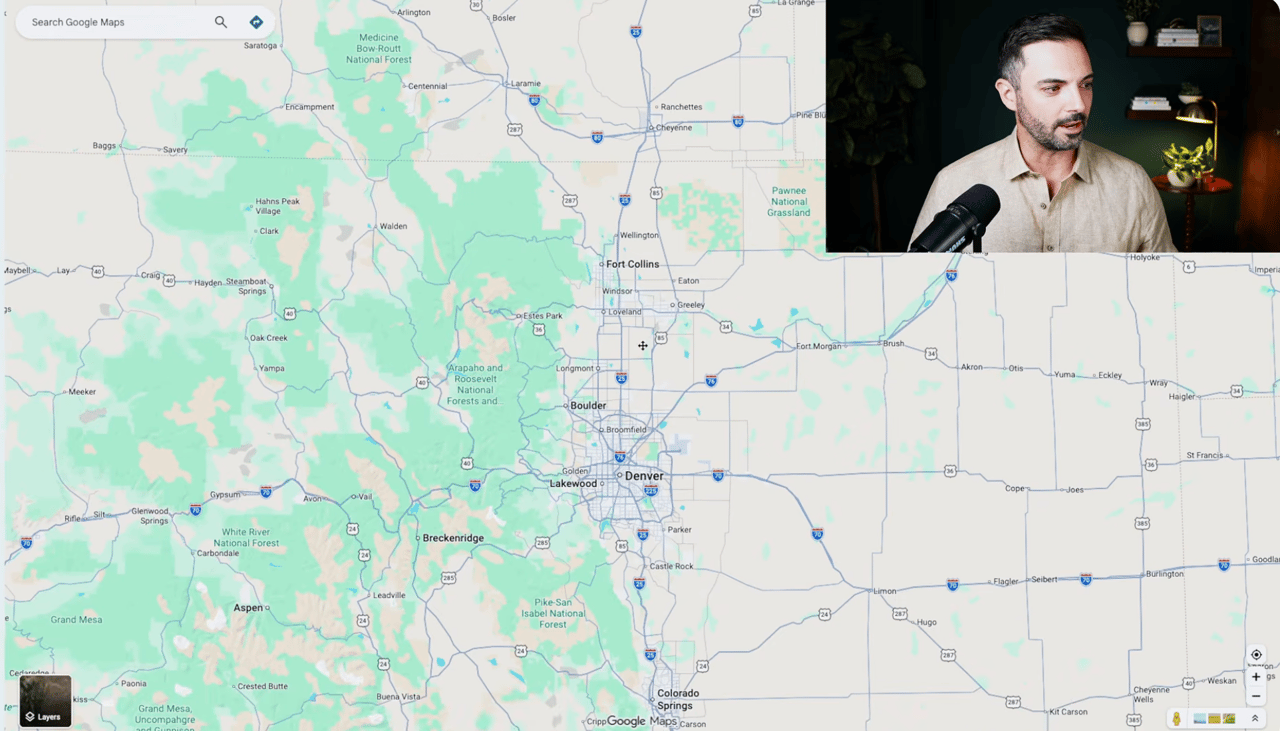
A region-by-region breakdown of the Denver metro area, from the urban core to the far suburbs, with home prices and lifestyle details for every area
He pays great attention to detail, ensuring his clients make sound, smart real estate choices and investments. Contact him today to discuss all your real estate needs!