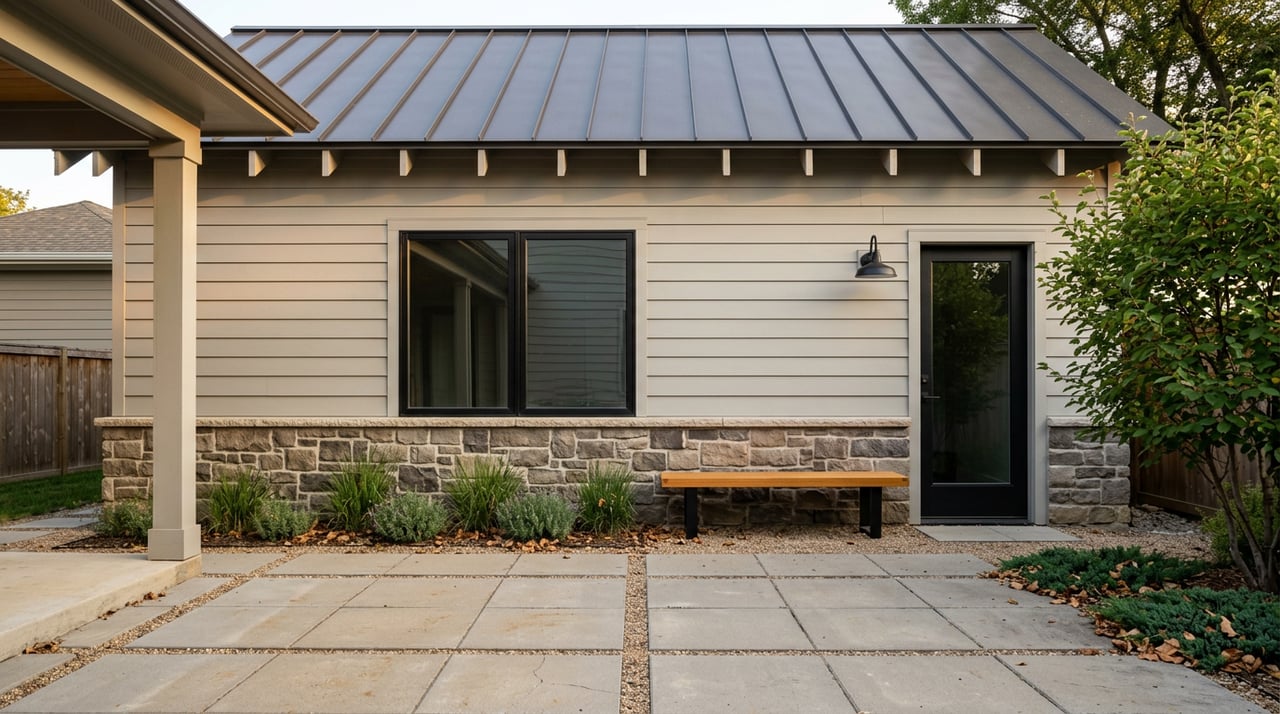
What Denver's Citywide ADU Rules Actually Mean at the Closing Table
July 23, 2026
July 23, 2026
A Denver appraisal came back last spring on a Berkeley bungalow with a finished basement unit the sellers had marketed as a mother-in-law suite. Kitchen, egress window, separate entrance, tenant paying $1,650 a month. The appraiser walked it, asked one question, and gave it zero square-foot credit. There was no permit on file. The buyer's lender treated the space as unfinished basement, the deal repriced, and a $60,000 assumption about equity walked out the door.
That is the story behind the story of Denver's new ADU rules. The zoning changed. The math at the closing table did not follow automatically.
Since the citywide ADU measure went into effect Dec. 16, 2024, allowing ADUs on 70% of Denver's land, compared to 36% before, and since Colorado HB 24-1152 prohibited cities from requiring owner occupancy for ADUs as of June 30, 2025, every single-family lot in Denver has quietly picked up a new line item on its balance sheet. The catch is that the line item only shows up in a sale price when three things line up: the unit is permitted, it can be comped, and the neighborhood has room above the current price ceiling for it to matter.
The single largest driver of ADU value in a Denver transaction is not size, finish, or rent. It is legal status. Fully permitted ADUs receive full credit from appraisers and lenders. Unpermitted, illegal, or non-compliant ADUs may add no value or even decrease it.
That distinction plays out in a predictable pattern at inspection and appraisal.
| Feature | Permitted ADU | Bootleg basement or garage conversion |
|---|---|---|
| Appraiser treatment | Counted as ADU under UAD 3.6 structured fields | Often excluded from finished square footage |
| Lender treatment | Rental income can support the loan | Income disregarded, financing hurdles common |
| Assessor treatment | On the tax roll at added market value | Off the record until discovered |
| Seller disclosure | Clean | Requires disclosure of unpermitted work |
| Buyer leverage | Priced in at listing | Price reduction or repair credit at inspection |
ADU valuation is more predictable today thanks to the Uniform Appraisal Dataset (UAD) 3.6. This system gives appraisers a clear, consistent way to document ADUs, reducing hidden details and making lender reviews easier. The upside for Denver sellers with a permitted unit is real. The downside for owners of the estimated thousands of informal basement apartments across older Denver neighborhoods is a quiet drag on comp selection.
If the unit was built without a permit, the practical fix before listing is a retroactive permit and inspection through Denver's Chapter 38 process. That is a months-long project, not a weekend one, and it belongs in the pre-list conversation, not the inspection response.
For a Denver property with an ADU, three valuation approaches are in play, and the one the appraiser leans on can swing the number by six figures.
The takeaway for sellers is to stage the paperwork the way a professional stages the interior. Lease, permit card, certificate of occupancy, and a rent survey from within a half-mile radius should be sitting on the counter for the appraiser, not emailed after the fact.
The number that surprises Denver homeowners most is not the build cost. It is the resale return, which varies more by ZIP code than by build quality.
On resale value, a new detached ADU typically returns 60 to 80 percent of its construction cost to home value at sale in current Denver-metro pricing, and that percentage keeps trending upward as buyer demand grows for multi-generational and rental-ready properties. Behind that average sits a wide spread.
In neighborhoods where the primary house sits well below the block's realistic ceiling, an ADU pulls the whole property up. Think older cottages on generous lots in Sloan's Lake, West Highland, and parts of Park Hill, where a permitted 750-square-foot detached unit turns a two-bed cottage into a legitimate multi-generational compound and adds a documented rent stream. A 750-square-foot one-bedroom detached ADU in Denver currently rents in the $1,800 to $2,300 monthly range. Underwritten at a typical cap rate, that income supports meaningful contributory value even before livable square footage is counted.
In very high-end neighborhoods such as Cherry Creek North and Observatory Park, ADUs add less to appraised value because the neighborhood is already at market top. A $6M Cherry Creek North lot is priced on land value, primary residence quality, and location, not on a backyard casita's income stream. Sellers there routinely overestimate the ADU premium because the online calculators do not respect the ceiling.
The interpretive rule for Denver: an ADU adds the most where the primary home is the modest one on the block and the least where the primary home is already the trophy on the block.
Both sides of a Denver ADU deal tend to overstate the property-tax hit, which shapes the negotiation in bad ways.
The Colorado math is straightforward. The size of the bump follows Colorado's own formula, which is your added value times the residential assessment rate (about 6.8% of market value in 2026) times your local mill levy. On a typical added ADU value that lands in the hundreds of dollars a year, not the thousands. Denver's mill levy sits inside the typical Front Range total of roughly 75 to 90 mills.
The other feature that changes the negotiation is timing. Colorado reassesses every two years, in odd years, so the higher value does not hit your bill the day the unit is finished. A buyer closing this summer on a home with a two-year-old ADU is probably paying tax on the pre-ADU value until the next assessor cycle. That is a real cash-flow gift in the first eighteen months of ownership, and it belongs in the offer analysis rather than as a surprise on the December escrow statement.
Two smaller pieces of the new regime move deals more than sellers expect.
An ADU is not a feature you check on the listing sheet. It is an asset with its own paper trail, its own appraisal method, and its own neighborhood ceiling. Sellers who prepare all three lift the sale price. Buyers who audit all three catch mispriced deals.
None of this matters in a vacuum, so a quick read on the wider market. In June 2026, the Denver Metro housing market remained balanced, with closed listings holding even at 4,024 homes sold, median home price up 1% year over year to $614,000, and homes spending a median of 19 days on the market. Concessions have become the dominant negotiating lever. Across 12,029 Denver Metro residential closings in Q2, 62.9% included a seller concession, with a median concession of $10,000. In total, more than $81.49 million was given back to buyers during the quarter.
An ADU that appraises cleanly is one of the few line items in this market that lets a seller hold price rather than write a concession check. That is the whole game.
Does an unpermitted basement apartment have to come out before I list? Not always. In many cases the better move is to retro-permit through Denver Community Planning and Development. The cost is real, the timeline is months, and the payoff is that the space counts at appraisal instead of triggering an inspection-objection repricing.
Can a buyer finance a home based on the ADU's rent? Yes, when the unit is permitted and the appraisal treats it as an ADU under UAD 3.6. Conventional and portfolio lenders differ on how much of the projected rent counts toward qualifying income. This is a conversation to have with a loan officer before writing the offer, not after.
Do the new rules override my HOA? For a flat ban in a Subject Jurisdiction, yes. For exterior design review, setbacks, and material standards, the HOA still has a seat at the table. Read the covenants alongside the current Denver zoning text before assuming either extreme.
How does an ADU change property taxes at closing? Added value flows into the next Colorado reassessment cycle, which runs in odd years. Between closing and that cycle, the buyer often pays tax on the pre-ADU value. Model both the current and post-reassessment bills before signing.
If you own a Denver home with an ADU or a lot that could support one, the difference between an average sale and a strong one is in the paperwork, the appraiser's approach, and the neighborhood read. That is the work. Ryan Haarer and the team at LIV Sotheby's International Realty pair cinematic listing marketing with the disciplined transaction management that turns an ADU from a listing bullet into a defensible price. Book a consultation and let's walk your property together.
Stay up to date on the latest real estate trends.

Five Denver metro neighborhoods positioned for long-term appreciation, and what it takes to protect that return after you own the home

A region-by-region breakdown of the Denver metro area, from the urban core to the far suburbs, with home prices and lifestyle details for every area

The same budget buys a small bungalow in one Denver neighborhood and 5,000-plus square feet in another. Here's what $1 million gets you across six of the metro's best … Read more
From overpricing to skipping staging, the most common missteps costing Denver sellers equity in today's market, and how to avoid them

From Golden's creekside energy to Cherry Creek's luxury district, a neighborhood-by-neighborhood guide to the Denver metro's best walkable centers
He pays great attention to detail, ensuring his clients make sound, smart real estate choices and investments. Contact him today to discuss all your real estate needs!