7 Major Projects Reshaping the Denver Metro Area's Future
Ryan Haarer June 19, 2026
Ryan Haarer June 19, 2026
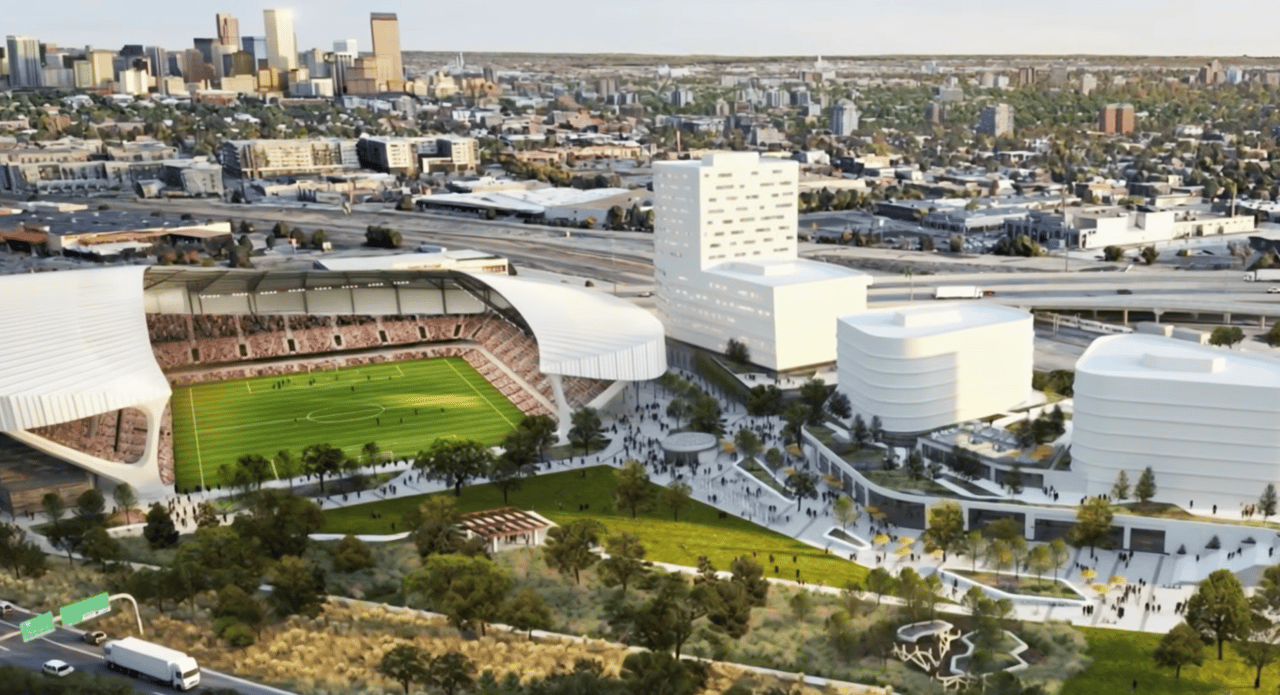
Denver is in the early stages of converting a 150-year-old railyard into a brand-new neighborhood on the edge of downtown, driven by plans for a new Denver Broncos stadium. That project is just one of seven major developments reshaping the metro area, several of which are already underway.
A stretch of land just south of downtown Denver along Interstate 25, long used as an industrial rail yard, has become one of the most closely watched development sites in the city. The Denver Broncos have selected Burnham Yard as their preferred location for a new stadium featuring a retractable roof, a design intended to keep the venue in play for cold-weather games and potential future Super Bowls.
The stadium itself is only part of a larger redevelopment plan. The broader vision includes a mixed-use district with restaurants, retail, entertainment, parks, trails, and housing, aimed at transforming a long-dormant industrial zone into an everyday destination rather than a game-day-only site.
The project is expected to strengthen connections between neighborhoods on the east side of the South Platte River, including Lincoln Park and Baker, and west-side neighborhoods such as Athmar Park and Barnum, effectively creating a new entry point to the west side of downtown.
Construction has not yet begun. The project remains in the planning phase, with a completion target around the 2031 season and significant approvals and funding details still pending. Large commercial real estate deals are already taking shape around the site in anticipation of the stadium district, and residential values in southwest Denver, currently among the more affordable areas in the city, could shift as development progresses.
Cherry Creek remains one of Denver's most upscale and sought-after neighborhoods, and the area north of First Avenue continues to draw high-end retail, restaurants, and luxury residential development. A Waldorf Astoria development currently under construction is expected to set a new benchmark for price per square foot in the city. Major companies that once defaulted to downtown Denver offices are increasingly choosing Cherry Creek instead, reflecting a broader shift in business activity toward the neighborhood.
South of First Avenue, near the Cherry Creek Mall, a project called Cherry Creek West recently broke ground on roughly 13 acres of surface parking, with plans to convert the site into a fully walkable district. The first phase includes hundreds of residences, Class A office space, and boutique retail, connected by pedestrian walkways leading to Cherry Creek itself.
Demolition began in early 2026, and the first office building in the development is already leasing. Full completion of phase one is targeted for 2029. The Cherry Creek mall is also adding mid-rise and high-rise residential development along its edges, further increasing density in the area.
South of Denver along I-25 in Lone Tree, RidgeGate is a 3,500-acre master-planned development that has been in progress for more than two decades. Unlike many suburban developments that build housing first and add amenities later, RidgeGate was designed from the outset as a mixed-use, transit-oriented community, with jobs, retail, housing, and infrastructure intended to grow together.
The development includes plans for a true downtown for Lone Tree, known as the City Center, which is expected to eventually include millions of square feet of office, retail, and restaurant space, along with housing for thousands of residents. The area is already connected by light rail.
Coordinated development of this scale tends to draw employers and retail activity, which in turn can support long-term home value growth in the surrounding area.
Centennial is in the process of redeveloping aging office parks and surface parking lots along I-25 near the Dry Creek Light Rail Station into a mixed-use center featuring new housing and retail. The goal is to create a walkable destination connected to transit, supplementing a city that currently leans heavily on big-box retail outside its residential neighborhoods.
The average home price in Centennial currently sits around $700,000. Continued development of walkable, transit-connected retail and housing could influence pricing in the years ahead.
Westminster, located along the US-36 corridor between Denver and Boulder, is home to more than 116,000 people and a growing life sciences sector. For years, the city lacked a defined downtown. To address that, Westminster redeveloped the site of the former Westminster Mall, which closed in 2011, into a new 105-acre mixed-use center.
The plan includes approximately 2,300 homes and more than 1 million square feet of office and retail space. Residential buildings are already open, and Aerostat Park is scheduled to open on May 30, 2026, alongside a central park area featuring a splash pad, dog park, event space, and trail loop. Restaurants and local businesses have also begun opening in the area.
City officials have described the project as a multi-decade undertaking, reflecting a long-term vision for growth. Home prices in Westminster remain more affordable than in much of Denver, and its location between two major metro areas continues to be a draw for buyers looking ahead of broader market trends.
North of downtown Denver, a historic stockyard complex along the South Platte River called National Western Center is undergoing an $800 million-plus transformation into a 2.2-million-square-foot campus focused on agriculture, research, innovation, and community space. Additional approvals in 2025 brought the total committed investment to roughly $1.6 billion.
The project includes a new equestrian center, a hotel, repurposed historic buildings, a community center, and about six acres of open space along the river, providing the area's first significant waterfront access. The Stockyards Event Center is already operational, The Yards outdoor event space is hosting concerts and festivals, and the CSU Spur campus is open and active. Once fully built out, the site is expected to host hundreds of events annually.
The River North Art District, known as RiNo, has become one of the most recognized creative districts in the western United States, drawing millions of visitors annually with its murals, breweries, food halls, and design studios.
New residential construction continues to reshape the district, including a 13-story luxury building that broke ground in April 2026 and a 310-unit project on Blake Street that began construction the previous summer. One River North, known for its distinctive canyon-style design, has become one of the area's most recognizable landmarks.
That growth is pushing outward along Brighton Boulevard, where the city has completed a full corridor redesign featuring bike lanes, trees, and wider sidewalks. Private development has followed, including new mixed-use projects in planning and a major tech company lease along the corridor. The long-term vision connects RiNo's existing energy to the National Western Center to the north, with new development expected to fill in the area between the two.
Markets that reward buyers most are typically the ones where future growth is visible before prices fully catch up. Across the Denver metro area, several of these projects offer early signals of where that growth may be headed next.
Ryan Haarer is one of the top 1.5% of realtors by volume in the country, according to RealTrends, and works with buyers and sellers in the Denver metro area. Reach out for a personalized consultation by calling or texting Ryan at 303-507-5910 or emailing him at [email protected].
Stay up to date on the latest real estate trends.
A breakdown of the five reasons certain Denver-area listings stall, and what buyers and sellers can do about it
From a new Broncos stadium district to a reimagined downtown in Westminster, these developments are set to transform real estate values across the region

Everything newcomers need to know about Denver's layout, counties, and surrounding suburbs before starting a home search

A tier-by-tier breakdown of eight Denver-area suburbs, from entry-level value to luxury addresses, and who each price point fits best

From urban hotspots to gorgeous mountain views, there's something for everyone
He pays great attention to detail, ensuring his clients make sound, smart real estate choices and investments. Contact him today to discuss all your real estate needs!