
Denver Suburbs Ranked by Price: From Aurora's $400s to Greenwood Village's $1.5 Million Estates
Ryan Haarer June 19, 2026
Ryan Haarer June 19, 2026
There's a $1.1 million gap between the Denver metro's most affordable suburb and its most expensive. That gap shapes far more than a monthly mortgage payment — it shapes commute times, school options, lifestyle, and long-term resale value.
Below is a ranking of eight Denver-area suburbs from cheapest to most expensive, along with a breakdown of who tends to fit best in each price tier.
Aurora often carries a reputation shaped by a small section of the city near Colfax, an area still in the early stages of revitalization. But drive farther south and east, and the picture shifts quickly. Colorado's third-largest city by both land size and population, Aurora is home to more than 411,000 residents and stretches far beyond what most buyers expect.
Along the southern stretch near E-470, buyers will find golf course communities, wider lots, new construction, and mountain views. Aurora's citywide median price sits in the mid-$400s, a figure pulled down by older housing stock near Colfax. That same median, though, means entry-level detached homes are still available in the mid-to-high $400s to the south and east — a rarity in the Denver metro.
Buyers seeking newer construction in the $400,000-to-$500,000 range have strong options in east Aurora, including communities like The Aurora Highlands, which offers easy airport access. Southeast Aurora pushes that value further, with homes up to 5,000 square feet available at a lower price per square foot than other parts of the metro.
One trade-off: infrastructure in the far eastern reaches of Aurora is still catching up to development. Areas near Southlands Mall are well served, but other pockets require a longer drive to reach a grocery store.
Aurora's momentum comes largely from major employers and regional transit. The CU Anschutz Medical Campus, the largest academic health center in the Rocky Mountain region, supports tens of thousands of jobs. Buckley Space Force Base adds another major employment center, and RTD's E and R rail lines connect residents directly to Union Station and downtown Denver.
The geography does come with a catch: commutes to the foothills, downtown, or the west side of the metro can run long. But for buyers anchored to the east metro, the airport, Anschutz, or the tech parks along E-470, Aurora remains the most affordable detached-home option on this list.
Lakewood offers a pitch that's hard to beat: breakfast at home, then a foothills trail or a trendy Denver brunch spot within 15 minutes. Colorado's fifth-largest city, Lakewood sits just west of Denver and stretches into the foothills, with a low-key, established feel.
Green Mountain, on the western edge, is a standout for buyers who prioritize outdoor access — trails are visible from some backyards. Most homes here date to the 1970s and 1980s, with classic ranches and split-levels selling in the mid-to-high $500s. Buyers wanting a full remodel or more than 2,500 square feet should expect to budget higher.
A few minutes east, Belmar serves as Lakewood's walkable retail hub, with outdoor dining, a Whole Foods, and seasonal street festivals. Homes here tend to be more updated, with 2,000-square-foot brick ranches also priced in the mid-to-high $500s.
Lakewood falls within the highly ranked Jefferson County school district. The RTD W Line connects the suburb to Union Station in about 27 minutes, making it a legitimate commuter option rather than just a convenient address. Red Rocks Amphitheatre sits roughly 12 miles away, putting a weeknight concert within easy reach.
For buyers priced out of Denver proper who still want quick access to the city, Lakewood offers one of the cleanest 15-minute pivots in the metro.
Many $600,000 suburbs around Denver offer a house, a yard, and a nearby Target. Arvada offers something more: Olde Town Arvada, a walkable historic downtown built around a 1910-era train station, with restaurants, breweries, shops, and galleries within a few blocks. The RTD G Line stops there, reaching Union Station in about 21 minutes.
Pricing across Arvada generally starts in the low $600s, varying by neighborhood. Olde Town and its surrounding older neighborhoods offer tree-lined streets and brick bungalows close to downtown Denver. Farther north, central Arvada near Standley Lake features mature neighborhoods from the 1970s through 1990s, with 2,000-to-3,000-square-foot ranches and split-levels.
Northwest Arvada communities such as Leyden Rock, Candelas, and Five Parks offer newer construction, modern floor plans, and views toward Boulder and the foothills, though $600,000 typically represents the lower end of pricing for single-family homes in these newer developments.
All these areas fall within Jefferson County Schools, the second-largest district in Colorado. Geographically, Arvada sits 15 to 30 minutes from downtown Denver and about 30 minutes from Boulder, giving residents access to both job corridors without fully committing to either side.
Centennial offers one of the metro's most desirable combinations: strong schools, mature trees, extensive trail access, and spacious homes. The suburb isn't aiming for trendy or urban — it's built around families, schools, and proximity to one of the region's largest job centers.
Centennial sits 20 to 30 minutes south of downtown Denver along Interstate 25, with the Denver Tech Center in its backyard. Major employers nearby include Dish Network, Lockheed Martin, and a range of financial services and technology firms. Workers along the I-25 tech corridor can reach their desks in about 15 minutes.
Centennial's citywide median sits in the mid-$600s, but the best value lies in the $700,000-to-low-$800,000 range, particularly on the west side of town. Schools are a major driver of that pricing: Cherry Creek High School holds a 9-out-of-10 rating on GreatSchools and serves a large portion of Centennial. Crossing into neighboring Greenwood Village or Cherry Hills Village means paying significantly more for access to the same district.
Homes in west Centennial's $700,000-to-$800,000 range typically run 2,500 to 3,000 square feet, with lower-priced homes needing cosmetic updates and higher-priced homes featuring more recent renovations. The Midtown Centennial development, underway along I-25, is set to bring additional retail and residential density to the area in coming years.
Castle Rock, the southernmost suburb on this list, has built a reputation around newer construction and strong value. The city blends a historic main street with local breweries and a summer farmers market alongside master-planned communities offering extensive amenities.
Castle Rock's citywide median sits in the low-to-mid $600s, but buyers wanting more than 3,000 square feet will find the best value in new or newer construction priced between $750,000 and $900,000.
Lifestyle amenities are a major draw: the city offers 104 miles of trails, 25 parks, and more than 4,000 acres of open space. The Outlets at Castle Rock, Colorado's largest open-air outlet center, features more than 100 stores, and downtown has a growing restaurant and brewery scene.
Douglas County Re-1, Castle Rock's school district, has ranked as the top-scoring district in the Denver metro for two consecutive years, with a 93.6% graduation rate. The trade-off is commute time — about 30 minutes to the Tech Center on a good day, and 40 to 50 minutes to downtown Denver. For remote and hybrid workers prioritizing space and newer construction, Castle Rock delivers value the older suburbs can't match.
Northwest Denver isn't technically a suburb — it's a collection of neighborhoods within the City of Denver, including the Highlands, Berkeley, Sunnyside, Sloan's Lake, and LoHi. It's included here because of how frequently it comes up among buyers comparing options at this price point.
In the mid-to-high $900s, buyers are paying for access to an urban lifestyle with historic character. Single-family homes typically come as brick Victorians or bungalows, with 1,000 to 2,000 square feet above grade plus a 500-to-1,000-square-foot basement, on lots generally running 6,000 to 7,000 square feet. Well-renovated versions of these homes often sell in the $900,000-to-low-millions range.
The appeal centers on walkability. West 32nd Avenue offers coffee shops, a wine bar, boutiques, and bookshops. LoHi brings a trendier vibe with nightlife, restaurants, and downtown views, connected via the Highland Bridge. In Berkeley, Tennyson Street offers walkable dining, independent breweries, galleries, and coffee roasters, including neighborhood staple Huckleberry Roasters.
Home types in Northwest Denver span a wide range, from original brick bungalows to new-construction spec homes priced at $2 million to $3 million, luxury townhomes in the $1-million-to-$2-million range, and smaller first-time-buyer townhomes in the $600,000s to $700,000s. Across that range, buyers are largely drawn by lifestyle and walkability rather than square footage.
Lone Tree is positioned to minimize trade-offs between commute, schools, amenities, and home size. Interstate 25 runs directly through the city, the Tech Center sits about 10 minutes north, and Castle Rock is roughly 15 minutes south.
Pricing for typical detached homes starts in the upper $800,000s and runs into the low millions, with buyers in the $1.2 million range generally getting 4,000 to 5,000 square feet. Custom builds and newer homes can run well past that, with several properties closing near $3 million this year. Newer neighborhoods like Sky Ridge and RidgeGate are often priced from the high $900,000s into the $1.3 million range.
Lone Tree is also home to Park Meadows Mall, Colorado's largest shopping center, and Sky Ridge Medical Center, a major full-service hospital. The biggest development on the horizon is RidgeGate, a 3,500-acre mixed-use project. While the West Village is largely built out, the east side is set to include a 440-acre mixed-use downtown core with two light rail stations, situated between Lincoln Avenue and RidgeGate Parkway.
Most of Lone Tree falls within the Douglas County school district. For buyers along the tech corridor seeking a single location without major compromises, Lone Tree is among the most complete options in the metro.
Greenwood Village ranks among the front range's premier addresses. Pricing typically starts in the mid-$1 million range, with most homes falling between $1.2 million and $2 million. High-end custom estates can reach $4 million to $5 million or beyond.
The city is largely built out, meaning large, established lots with mature trees and landscaping are increasingly hard to come by — and increasingly valuable. The commute to the Tech Center is measured in minutes, and Cherry Creek High School is physically located within Greenwood Village.
Dish Network's headquarters sits nearby, anchoring the DTC job corridor, and Fiddler's Green Amphitheatre, with 18,000 seats, offers one of the region's premier outdoor concert venues. The Landmark district provides upscale dining and retail, and Cherry Creek State Park is minutes away.
Neighboring Cherry Hills Village represents the next step up, with pricing starting around $3 million. Greenwood Village offers similar prestige and the same school district at a relatively more accessible price point, with housing stock ranging from 1970s-era ranches to custom modern estates.
The right Denver-area suburb is the one where the trade-offs align with the life a buyer is building. Many buyers focus on price tier alone and overlook lifestyle fit — a mismatch that often results in the right house in the wrong neighborhood.
Ryan Haarer is one of the top 1.5% of realtors by volume in the country, according to RealTrends, and works with buyers and sellers in the Denver metro area. Reach out for a personalized consultation by calling or texting Ryan at 303-507-5910 or emailing him at [email protected].
Stay up to date on the latest real estate trends.
A breakdown of the five reasons certain Denver-area listings stall, and what buyers and sellers can do about it
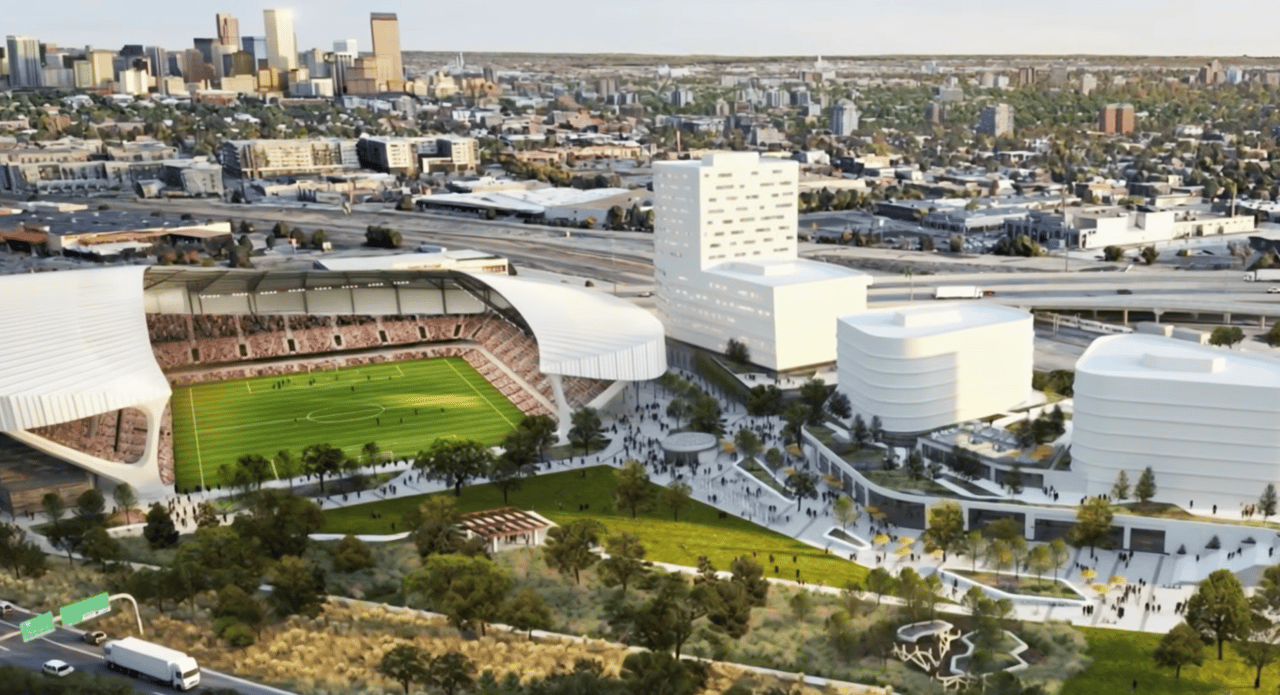
From a new Broncos stadium district to a reimagined downtown in Westminster, these developments are set to transform real estate values across the region

Everything newcomers need to know about Denver's layout, counties, and surrounding suburbs before starting a home search
A tier-by-tier breakdown of eight Denver-area suburbs, from entry-level value to luxury addresses, and who each price point fits best

From urban hotspots to gorgeous mountain views, there's something for everyone
He pays great attention to detail, ensuring his clients make sound, smart real estate choices and investments. Contact him today to discuss all your real estate needs!